Whilst looking through the records for the Gloucester Asylum in particular the case book there are times when you wonder what is classed as madness in the time of the First World War?
There are two cases which turned up which showed the sublime and the ridiculous.
The sublime - and it raises the question as to what treatment did he receive - is the soldier who's initial entry said the following:
"Suffers from incoherent ramblings and says that all he wants is to be shown a little kindness" Personally I think that is all any of us want in this world.
The ridiculous is very much stranger and again the initial entry for the patient says:
"Sings a lot and says this is because he was raised on bird seed. Also claims to be able to train animals. Has had most success he claims recently with training winkles" Strangely these aren't listed as "incoherent ramblings".
The case book lists almost 40 soldiers who were patients in the Horton Road asylum in 1917 - all suffering from different mental health problems from what "hearing voices" to what would now be classed as depression.
Showing posts with label Mental Health. Show all posts
Showing posts with label Mental Health. Show all posts
Monday, March 4, 2019
Defining Madness

Monday, January 28, 2019
Asylum Records

William Charles Phillips records carry a standard document on them which any ordinary soldier who was classed as having neurasthenia (shell shock) had attached. This always has the same title on it that is shown above.
So a man who has, according to his records, paralysis is classed as a "dangerous lunatic soldier".
As the research widens there are statements from officers that those with shell shock are "worthless" to the army and it would be better if "they were shot". Thankfully not everyone felt this way.
About War in Mind
War in Mind is a new project from Spaniel in the Works Theatre Company supported by the Heritage Lottery Fund and looking at the legacy of World War One through stories about shell shock.
The project came about when we discovered Tetbury driver William Charles Phillips who died of paralysis in Gloucester Asylum in 1917. He wasn't actively fighting and yet the things he must have witnessed left his completely paralysed.

The project came about when we discovered Tetbury driver William Charles Phillips who died of paralysis in Gloucester Asylum in 1917. He wasn't actively fighting and yet the things he must have witnessed left his completely paralysed.
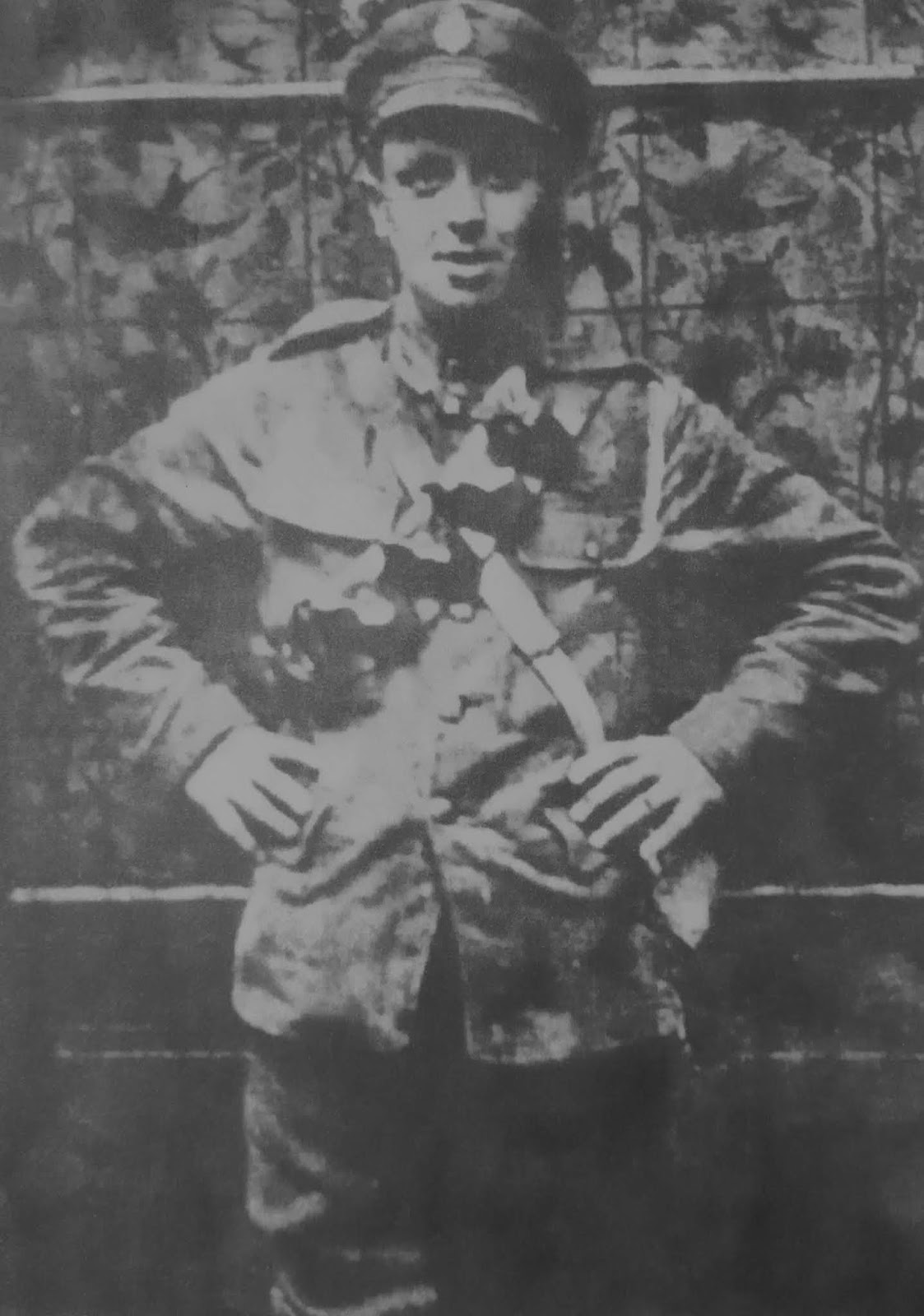
Driver William Charles Phillips
As part of the project we will work with groups to look at research material and family histories through a series of workshops.
There will also be family workshops to create new print artworks based on World War One images inspired by the linocuts of William Kermode.
More information about our events can be found on www.spanielworks.co.uk or on our War in Mind Facebook page.
Subscribe to:
Posts (Atom)